Nepal : Design & Build
Mentor : Nirpal Adhikari, ABARI
Introduction
This specialization course was a unique opportunity to explore the complex country of Nepal and dive deep into building strong and resilient communities.This program explored the built environment – particularly building using sustainable, locally sourced materials, and the architecture, design and engineering practices used in Nepal. A group of 22 students from the School of Environment and Architecture, along with the help of a few architecture students from Khwopa College of Engineering helped in the documentation of Swayambhunath, Kathmandu.
Site of study : Swayambhunath , Nepal
We chose Swayambhunath as our site of study due to its numerous chaityas of various types, periods, styles, and stories. Many chaityas within the Swayambhu complex have stories that are not as well-documented as others. Our task was to uncover these stories during our documentation process through readings, interviews, and conversations with the people at Swayambhu.

Method Of Study
Books referred for literary reviews:
Sri Swayambhu Mahachaitya
The elements of Buddhist Stupa Architecture
Masterplan of Swayambhu Mahachaitya
Traditional Architecture of Kathmandu Valley
Site Documentation


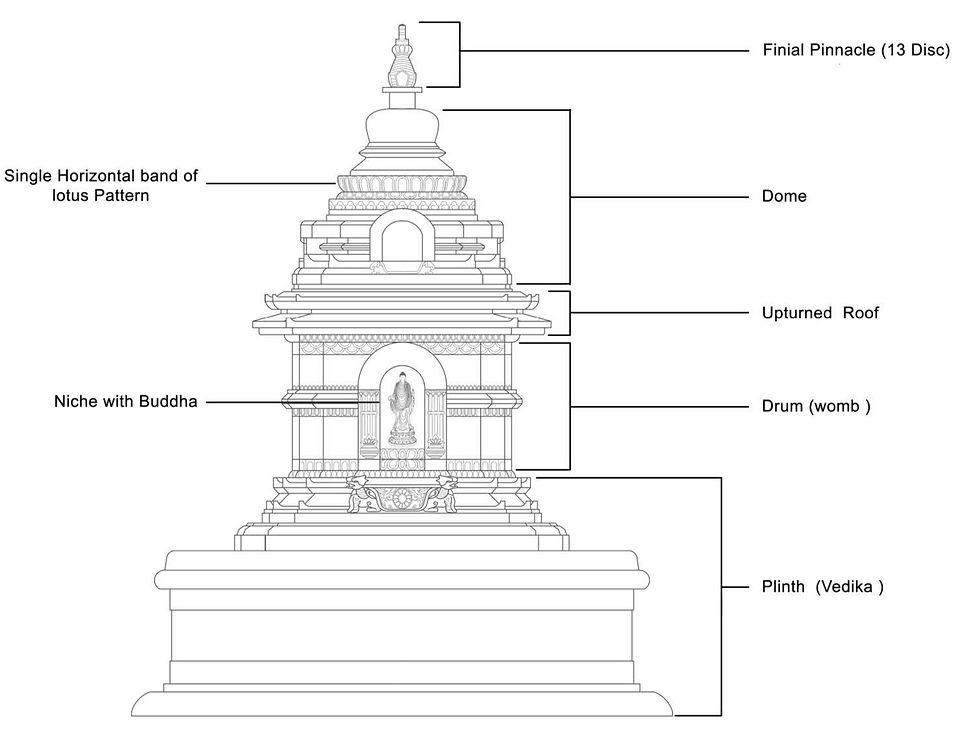
ELEMENTS OF CAITYA
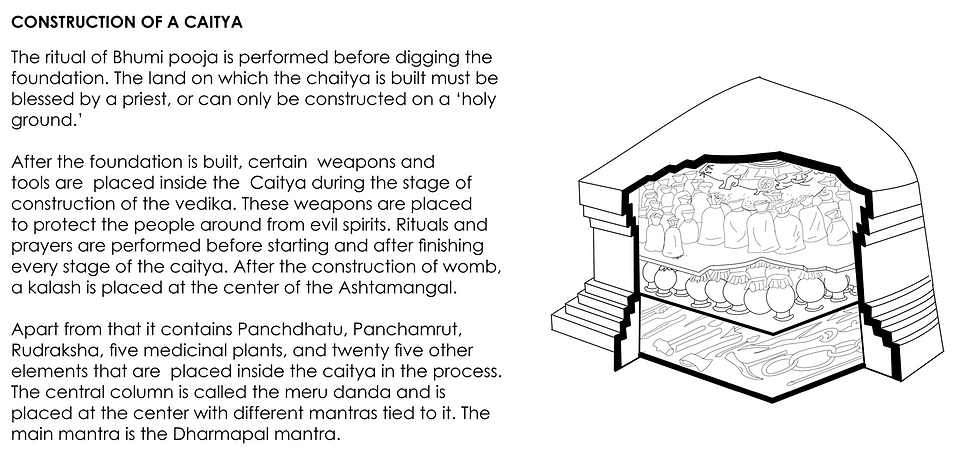
TYPES OF CATIYA


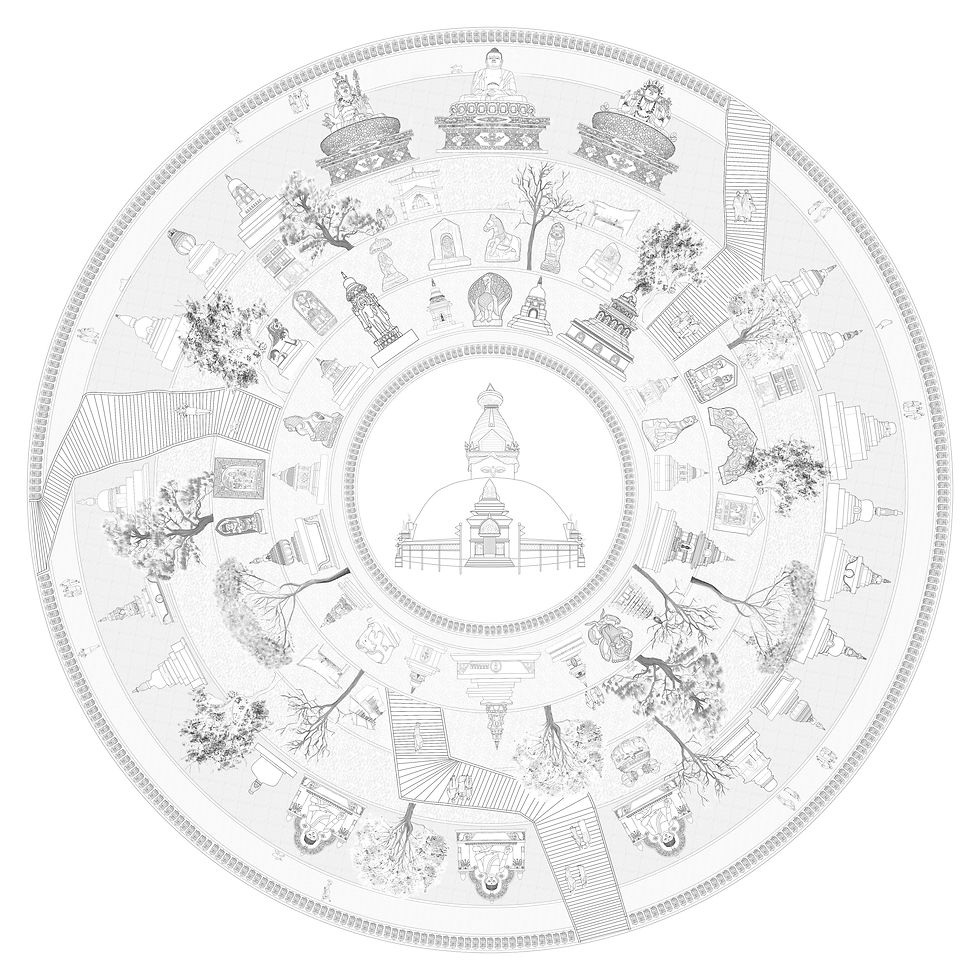
The Swayambhu Hill has around 300 chaityas of more than thirty varying types.
They are concentrated as clusters around various shrines, mahachaityas and gompas around. We have identified the caityas in 13 main clusters.
The edge of the hill is a larger pradakhshina path. There are three staircases and one motorway that directly connects you to the Vasubandhu Memorial.
A majority part of the hill has dense vegetation.
Apart from the multiple temples, shrines, gompas there are also residences for llamas and priests, restaurants and cafes, souveniur shops, etc.
Swayambhu is amongst the oldest relegious sites in Nepal. According to Gopālarājavamśāvalī, it was founded by the grandfather of King Manadeva, King Vrsadeva about the beginning of the fifth century CE. Although the site is considered Buddhist, it is revered by Hindus as well.

Illustrative Map Of Swayambhu Hill
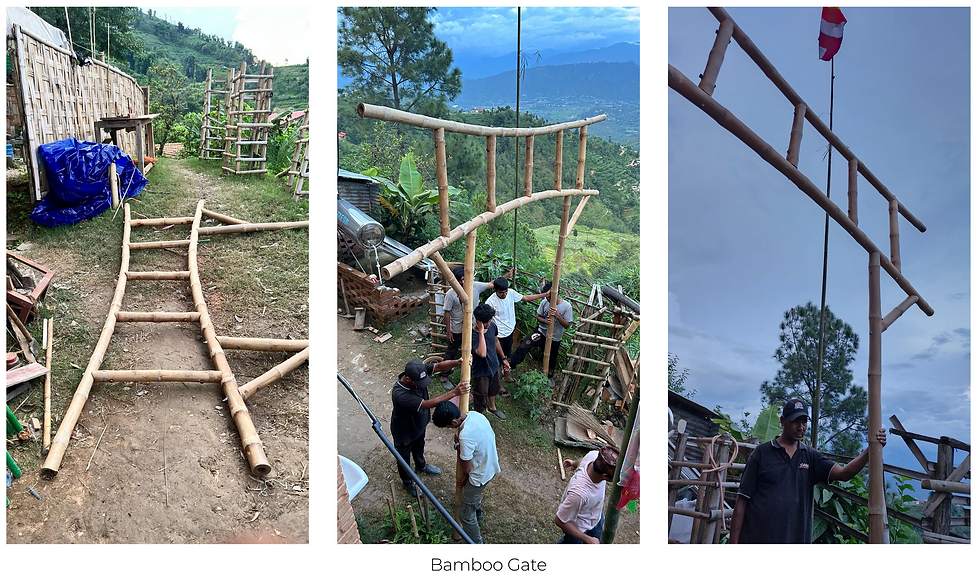
Hands-on Workshop in Dhulikhel
Working with soil and rammed earth


Construction of Chatiya




Comments